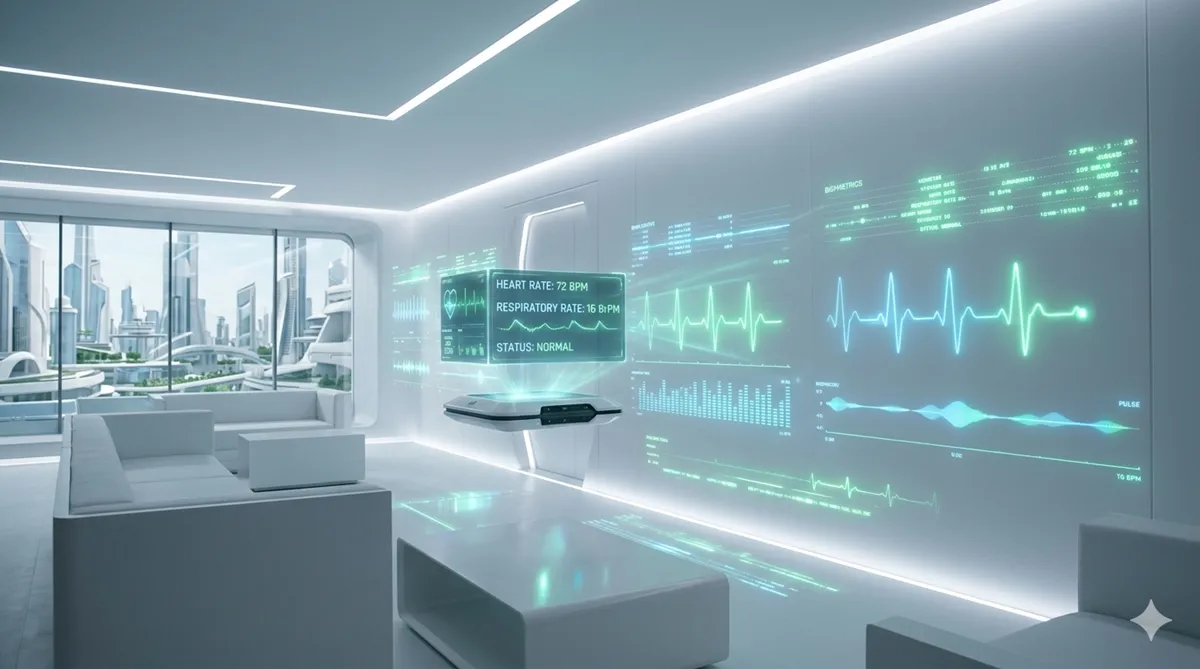
Movie The Island imagined a world where health is managed by the room itself rather than wearable devices. While the film’s system was designed for control, many of its core technologies are already emerging today. Wi-Fi sensing, remote photoplethysmography (rPPG), and AI-powered biosensor toilets are making contactless health monitoring increasingly realistic. The real question is no longer whether we can build such systems—but whether we use them for surveillance or for care.
The movie “The Island” features some incredibly cool hoverbikes. The story is set in a “safe shelter” protected from global contamination, where the survivors of humanity live with the dream of winning the lottery—a chance to move to “The Island,” the last paradise on Earth.
The protagonists are strictly managed to the point where they are denied not only health and safety, but also their own thoughts and romantic feelings. The true purpose behind this is nothing but human ego at its ugliest. While the movie shines with its high-octane action scenes, there was one particular element that made me go, “Wait… hold on a second.”
It was their living quarters—those eerily quiet, sterile white rooms used to monitor them.
There was this indescribable sense of unease, a lingering bad feeling, wasn’t there? Their health was constantly checked through monitors, and even their meals and behaviors were optimized… It was the very definition of a “dystopian symbol.” However, when I looked at the “functions of the room itself” through my eyes as an engineer, I made some pretty fascinating discoveries.
1. The Power of “Environmental Control” in the Movie ‘The Island’
In the film, health status is constantly monitored through screens, and everything from physical activity to meal intake is strictly managed. For us living in the modern world, you could think of it as a “massively upgraded smartwatch.”
I’ve carefully observed the functional differences, and I believe they can be broken down as follows:
Comparison: Modern Smartwatches vs. ‘The Island’ Living Units
| Feature | Modern Smartwatch | The Island’ Living Unit |
| Wearability | Required. Comes with the hassle of wearing it and charging batteries. | Completely contactless. You’re monitored just by being in the room—even if you’re naked or asleep. |
| Data Depth | Mainly superficial vitals (heart rate, SpO2, skin temp). | Internal chemistry. Analyzes nutrition and hormones from waste and breath. |
| Intervention | “Time to walk” notifications (which you can easily ignore). | Physical constraints. Enforced dietary restrictions and forced activity shutdown. |
| User Awareness | You have to consciously check apps and numbers. | Unconscious. Everything is adjusted without you noticing; you don’t even have to think. |
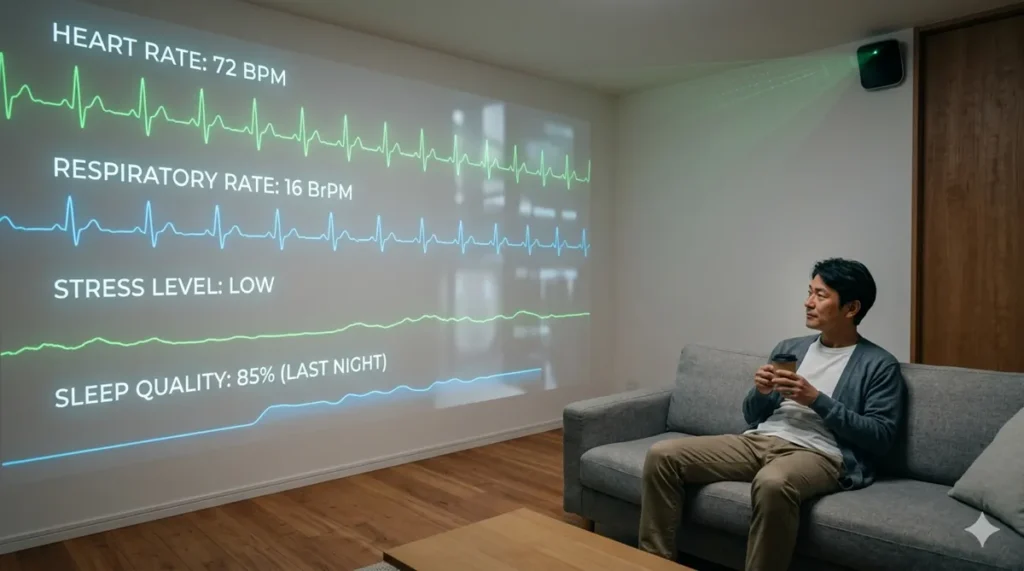
While being perfectly managed might be stressful, what if we viewed this as a “health maintenance service”? Personally, I think it’s a very viable idea. In hospitals or nursing homes, this alone could significantly streamline health management. Even in private homes, it might be exactly the kind of service needed in modern Japan.
So, is it possible to replicate this with today’s AI technology? The answer is: we’re already standing at the threshold of this technology.
2. Replicating the “White Room” with Modern AI Tech
To achieve the kind of management seen in the movie, there are three technologies currently under development. These form the backbone of a modern-day “White Room”:
- Wi-Fi Sensing (Monitoring via Radio Waves): Detecting “breathing” or “falls” using only the disturbance of Wi-Fi signals, without any cameras.
- rPPG (The Guardian in the Mirror): Extracting heart rate and stress levels from invisible “color changes” (blood flow) on the face.
- Bio-sensor Toilets: Analyzing nutritional status from waste—prototypes already exist from some manufacturers.
By integrating these with Python and advanced algorithms, a prototype of that “White Room” is already becoming a reality. Let’s dive deeper into each.
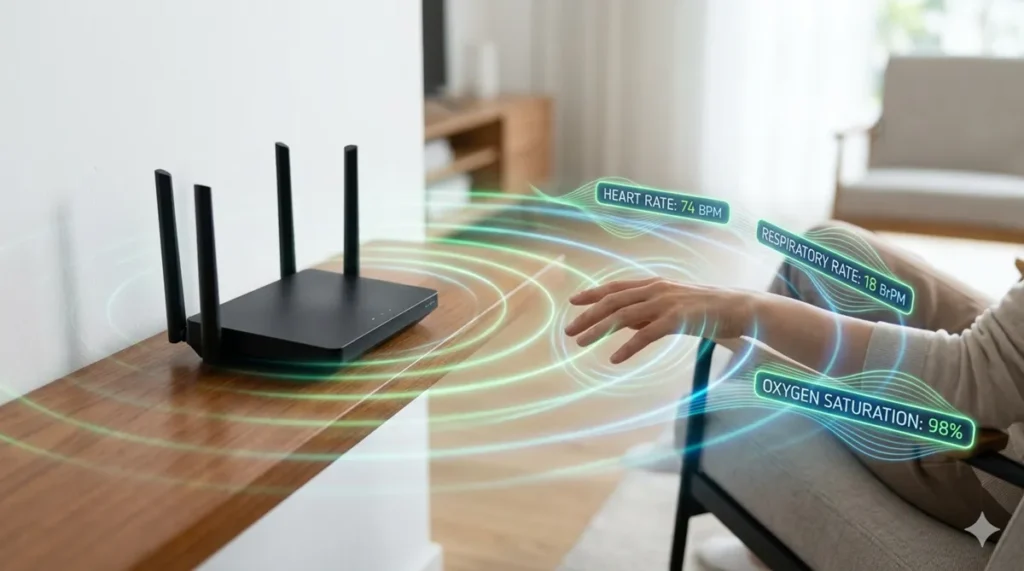
① Wi-Fi Sensing: Decoding Signal Disturbances
This tech uses Wi-Fi signals like “radar.” Radio waves bouncing around a room reflect off walls and furniture, but even a slight movement—like the rise and fall of a chest during breathing—causes minute changes in the waveform known as CSI (Channel State Information). By feeding this waveform data into Python-based machine learning models (like CNNs or RNNs), it’s possible to detect events like “falling out of bed” or “shallow breathing” with centimeter-level precision, all without a camera.
② rPPG: The Mirror That Scans Your Blood Flow
rPPG (Remote Photoplethysmography) is a technique to extract minute color changes in the skin from camera footage. Every time the heart beats, blood flow to the face changes, causing a rhythmic color shift invisible to the naked eye. Using Python image processing libraries like OpenCV to track the face and AI to filter out noise, we can calculate heart rate, stress levels, and even blood pressure trends just by having someone stand in front of a mirror.
③ Bio-sensor Toilets: Waste as a Wealth of Information
The scene where waste is automatically analyzed is also becoming a reality. Sensors inside the toilet bowl use image recognition AI to determine urine sugar/protein levels or stool shape. This data is sent to the cloud, providing personalized feedback like “Too much salt in yesterday’s meal” or “You’re dehydrated” via smartphones or smart mirrors.
While we can’t perfectly replicate the movie’s units yet, you can build a similar environment today with a decent PC and a few affordable devices.
For those interested, check out these resources:
- arXiv.org: A site for the latest research papers. Search for “rPPG” or “Wi-Fi Sensing” to find a mountain of info.
- Papers with Code: Highly recommended for learners. It pairs papers with their Python implementations, making it easy to run code while you learn.
- IEEE Xplore / ACM Digital Library: Engineering journals. Even reading the abstracts will give you a clear picture of the global cutting-edge.
3. Conclusion: Is the Future About Surveillance or Care?
The management system in the film was horrifying—stripping away freedom to the point where humans were treated like livestock.
However, technology itself is not a sin, nor is it something to be hated or feared. Depending on how it’s utilized, it can save precious lives. As I’ve shown through its technical feasibility, “Proactive Care” is a goal that future nursing and medical fields are striving to reach.
How the code we write today will be used—that is a choice we, as engineers, must make for ourselves.
Ready to uncover the secrets of “The White Room” with your own eyes?
The “contactless sensors” and “futuristic toilets” I’ve introduced might sound cool in text, but seeing them in action is on a whole different level. You’ll likely find yourself going, “Wait… wow,” at the eerily impressive reality of it all.
Watching the “future daily life” depicted in this 2005 film through our lens as modern tech-knowers reveals so many fascinating new discoveries. Why not take another look at the movie and see for yourself?


コメント